St Lucia Taxis And Getting Around After Your Airport Transfer
Your airport transfer gets you to the resort. The other six days are a different question. Here is how taxis, minibuses, rideshare and rental cars actually work on the island, and how to plan the ride back.

Short answer
St Lucia taxis run from taxi stands or by phone, carry a light blue TX plate, are not metered, and the Tourism Authority says to confirm the fare before you hire one. Minibuses (green M plate) cost EC$2.50 to EC$8.00 but do not suit airport luggage. Allez is a homegrown rideshare app with upfront fares. Visitors who drive need a temporary licence.
Your transfer lands you at the resort, bags and all, and for many visitors that is the last organized transport of the week. The rest of a Saint Lucia trip runs on taxis, minibuses, a homegrown rideshare app, or a rental car, and each of those works differently from what most North American and European visitors expect. The airport itself sits on the southern cape near Vieux Fort, about 53.4 km from Castries, and most of the island's resort areas sit at the far end of a long and winding road north. Getting around after arrival is worth ten minutes of planning before you fly.
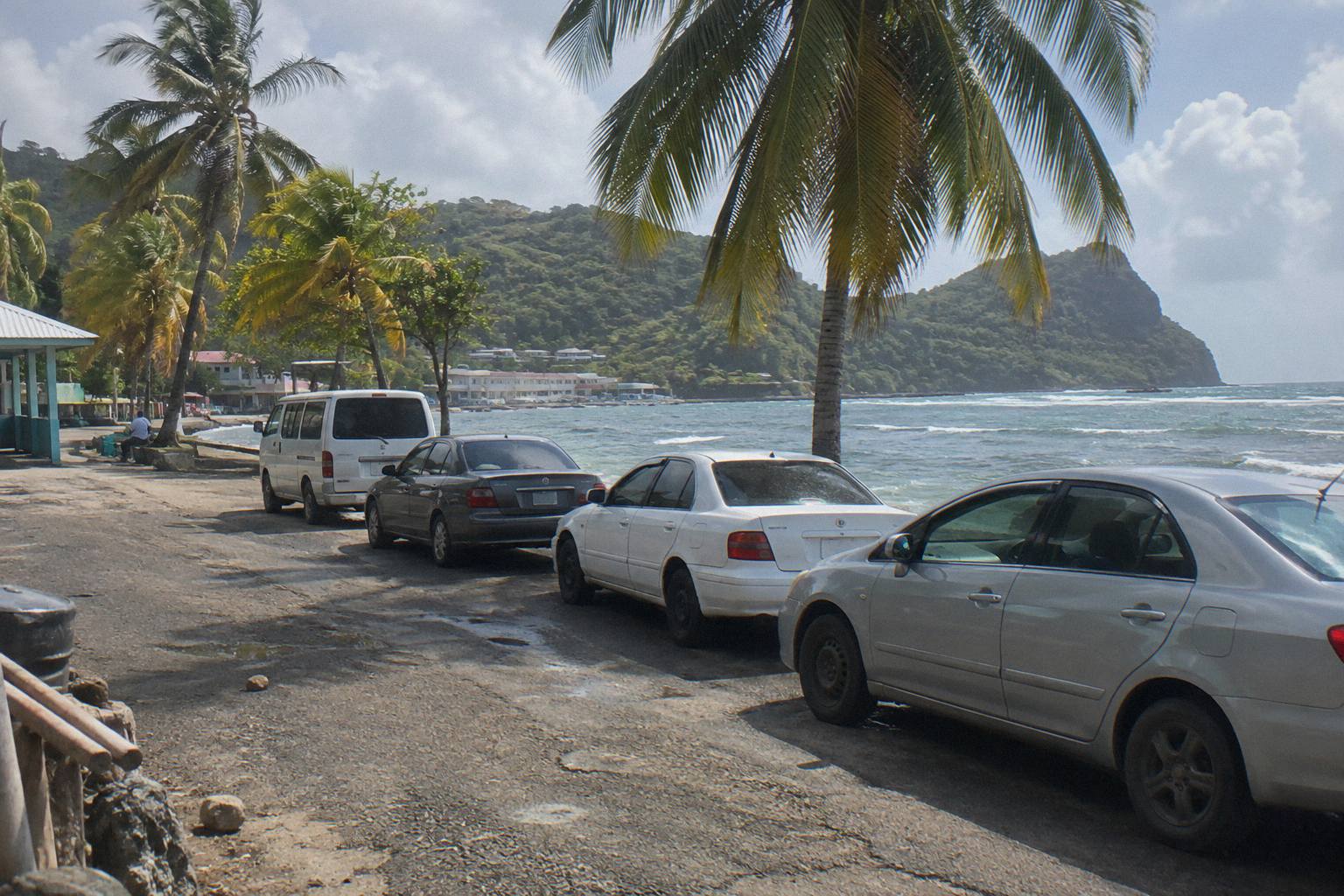
The four ways to move around the island break down cleanly: authorized taxis you hail at a stand or call by phone, local minibuses that carry residents between towns, the Allez app that works like a cashless rideshare service, and a rental car under a temporary driving licence. The Saint Lucia Tourism Authority publishes the ground rules for all four on its getting-around guidance, and the airport authority's own page at SLASPA lists taxi services among the facilities at Hewanorra. This guide walks through each mode, what it costs or does not cost, and where the decision points sit for a week-long stay. If you have not yet sorted the first ride from the airport, Hewanorra Airport Transfer covers that end to end.
How Do St Lucia Taxis Work After Your Airport Transfer?
Taxis in Saint Lucia are found at taxi stands or booked by phone, every authorized taxi carries a light blue number plate with a TX prefix, and none of them are metered. Fares vary by destination, the number of people, the amount of luggage and the company, so the Tourism Authority's advice is to confirm the fare before you hire the taxi, not after.
That last point is the whole game. There is no meter to arbitrate a disagreement at the end of a ride, so the fare conversation happens at the start. The Tourism Authority's getting-around page states plainly that fares vary by destination, party size, luggage and company, and its instruction to travellers is to settle the price before the ride begins. An operator statement adds that island taxis are not metered at all, which makes the pre-ride confirmation a habit rather than a nicety.
The plate is your authenticity check. Authorized taxis carry a light blue number plate with a TX prefix, per the Tourism Authority, and any car without one is not an authorized taxi no matter what the windshield sign says. Taxi stands sit in the usual places: outside resorts, in town centers, at the airports. The SLASPA airport page lists taxi services among Hewanorra's facilities, which means the stand outside the terminal is the sanctioned pickup point rather than a curb negotiation.
Where taxis fit into a week is the middle ground: a dinner run into Gros Islet, a day trip to Soufriere, a shopping stop in Castries. For the resort-to-airport leg at the end of the trip, the calculus changes slightly, because that ride has a flight attached to it. That is where a pre-booked private driver earns its keep over a stand taxi, and the last section of this guide covers it. If your return flight leaves outside normal hours, the late night airport transfer timing guide is worth a read alongside this one.
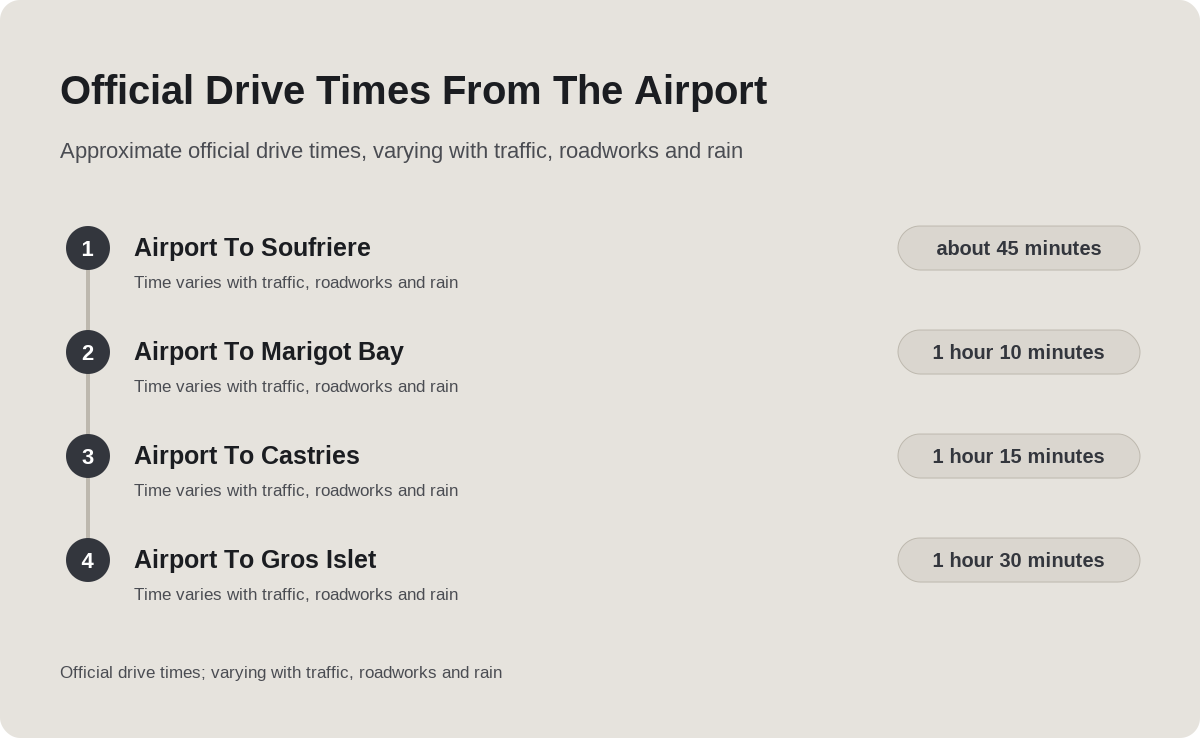
The official drive times give a sense of what a stand ride anywhere on the island involves: about 45 minutes to Soufriere, about 1 hour 10 minutes to Marigot Bay, about 1 hour 15 minutes to Castries and about 1 hour 30 minutes to Gros Islet, always varying with traffic, roadworks and rain. A taxi hired for the evening in Rodney Bay is a short hop; a taxi hired for lunch in Soufriere is an hour each way along a winding coast road, which is exactly the kind of ride where agreeing the fare first matters most, since the return leg is usually arranged with the same driver.
| Taxi situation | How it works | What to do first |
|---|---|---|
| Airport stand on arrival | Sanctioned stand listed by SLASPA | Confirm destination and fare before loading bags |
| Resort to dinner, same area | Hail at a stand or have the hotel call | Ask the desk for the going fare range as a sanity check |
| Resort to Soufriere day trip | Usually arranged by phone in advance | Agree fare, waiting time and return pickup together |
| Hotel to airport, departure day | Stand taxi or pre-booked page | Pre-book for flights near the 6:00 am to 11:00 pm window edges |
Is There An Official St Lucia Taxi Fare Table?
No. Neither the government nor SLASPA publishes a taxi fare table, so no fare you are quoted can be called official or fixed. Fares are set ride by ride based on destination, party size, luggage and company, which is exactly why the Tourism Authority tells visitors to confirm the fare before hiring a taxi.
This surprises visitors from places where airports post regulated fare charts. Saint Lucia does not, at least not in any published form, and this site will not print a taxi fare figure or range from anywhere because none carries official standing. Anyone quoting you a number, including another website, is quoting an estimate, an operator's price or a recollection, not a regulated rate. If a question about taxi costs is what brought you here, the honest answer is that the fare is whatever you and the driver confirm before the ride.
The practical method is simple. State your destination, state your party size, state your luggage, and ask the price before getting in. Do that at the stand outside the terminal or on the phone when booking, and write the number down if it helps. The Tourism Authority endorses exactly this flow on its getting-around page, and it is the only protection that exists in the absence of a fare table.
What you can price in advance is a pre-booked private transfer, because those are published products with from-prices on their booking pages rather than negotiated fares. Refresh Tours And Taxi Service lists a private transfer from US$130 per vehicle with a 5.0 rating from 63 reviews, bottled water and an air-conditioned vehicle included. Rising Sun Taxi Service Saint Lucia lists a round-trip private taxi from US$266.67 per group, rated 5.0 from 248 reviews, with soda, bottled water, light snacks and local Piton beer on board. Off The Beaten Path Taxi Service lists a one-way private transfer from US$120 per vehicle, rated 4.9 from 55 reviews, with hotel pickup and drop-off listed. All three carry free cancellation up to 24 hours before, and a price varies by date, destination and party, with the booking page confirming it.
A pre-booked page answers the fare question before you land, which is its real advantage over the stand. A stand taxi can be the right tool for a spontaneous evening out, where the fare confirmation takes thirty seconds. For the rides that anchor a schedule, the airport legs, published pricing removes the negotiation entirely. If weighing the two formats against each other is the decision in front of you, the taxi or pre-booked transfer comparison walks through it ride by ride.
Can You Use Minibuses To Get Around St Lucia?
Yes, for local trips, but not with resort luggage. Minibuses are the island's main local transport, carry a green plate with an M prefix, and charge EC$2.50 to EC$8.00 per the Tourism Authority. They link towns and villages on set routes, which makes them a genuine way to see everyday Saint Lucia, but a poor fit for an airport-to-resort run with suitcases.
The minibus network is how residents move. Green plates with an M prefix mark them, per the Tourism Authority, and the fares on its page run EC$2.50 to EC$8.00, which places them in a completely different category from any private transfer. That fare range belongs to local journeys between communities, and it is deliberately not placed in any transfer comparison table on this site, because comparing an EC$8 bus ride to a private airport car compares two different products.
As advice rather than a source claim: a minibus is worth trying on a free day, from Castries to Gros Islet for instance, with a small bag and no schedule pressure. It is not the vehicle for arrival day. Luggage-laden arrivals, a set route that does not pass every resort gate, and a timetable built around local commuting rather than flight times all point the same way. Take the pre-booked transfer in, then take the bus out of curiosity later in the week.
Money mechanics help here. The Eastern Caribbean dollar is pegged at EC$2.70 to US$1, and while US dollars are widely accepted by hotels, restaurants, tour operators and taxis, a minibus fare of a few EC dollars is a cash-local proposition, and change is often given in EC dollars. Carry small EC notes for the bus and save the dollars for everything else.
If the return airport leg is already on your mind, that is the ride worth locking in now rather than improvising at a stand with bags in hand.
Does The Allez Rideshare App Work At Saint Lucia Airports?
Yes. Allez is a homegrown Saint Lucia rideshare app that covers airport arrivals, shows an upfront fare estimate before you book, and supports cashless payment, all per the Tourism Authority. It is the closest local equivalent to the ride-hailing apps visitors use at home, though this site prints no Allez fare because none is published.
Allez deserves attention precisely because it solves the meter problem in a different way. Where a stand taxi requires a verbal fare confirmation, the app puts the estimate on your screen before you commit, and the cashless payment removes the end-of-ride cash scramble. The Tourism Authority lists it on its getting-around page as part of the island's transport picture, including its coverage of airport arrivals.
Two honest caveats. First, an estimate is an estimate, and no Allez fare figure appears in this article because the Tourism Authority does not publish one. Second, coverage and availability vary with driver supply, which is thin in the island's quieter corners regardless of what any app map suggests. For a rural route on a Sunday evening, the phone-and-a-taxi-stand approach still wins.
The app slots into the same decision tree as everything else in this guide. For solo travelers and couples making short hops between resort areas, an upfront-fare app is a genuine convenience. For a family with four suitcases heading to a specific resort on a specific clock, a pre-booked private vehicle remains the format built for the job. Phvtours lists a private minivan transfer from US$64.90, rated 4.9 from 347 reviews, with wifi on board, beverages and an air-conditioned minivan on the booking page; it is a one-way private transfer that also offers return transfers on request, with a minimum age of 16 on that page and a listed duration of 60 to 90 minutes.
One more pairing worth knowing: the app covers the arrival end per the Tourism Authority, but arrival day is exactly when luggage, fatigue and a payment setup you have not tested all collide. Install Allez before you fly, link a card, and use it for the middle of the week. Let a confirmed booking handle both airport legs.
Should You Rent A Car After Your Airport Transfer?
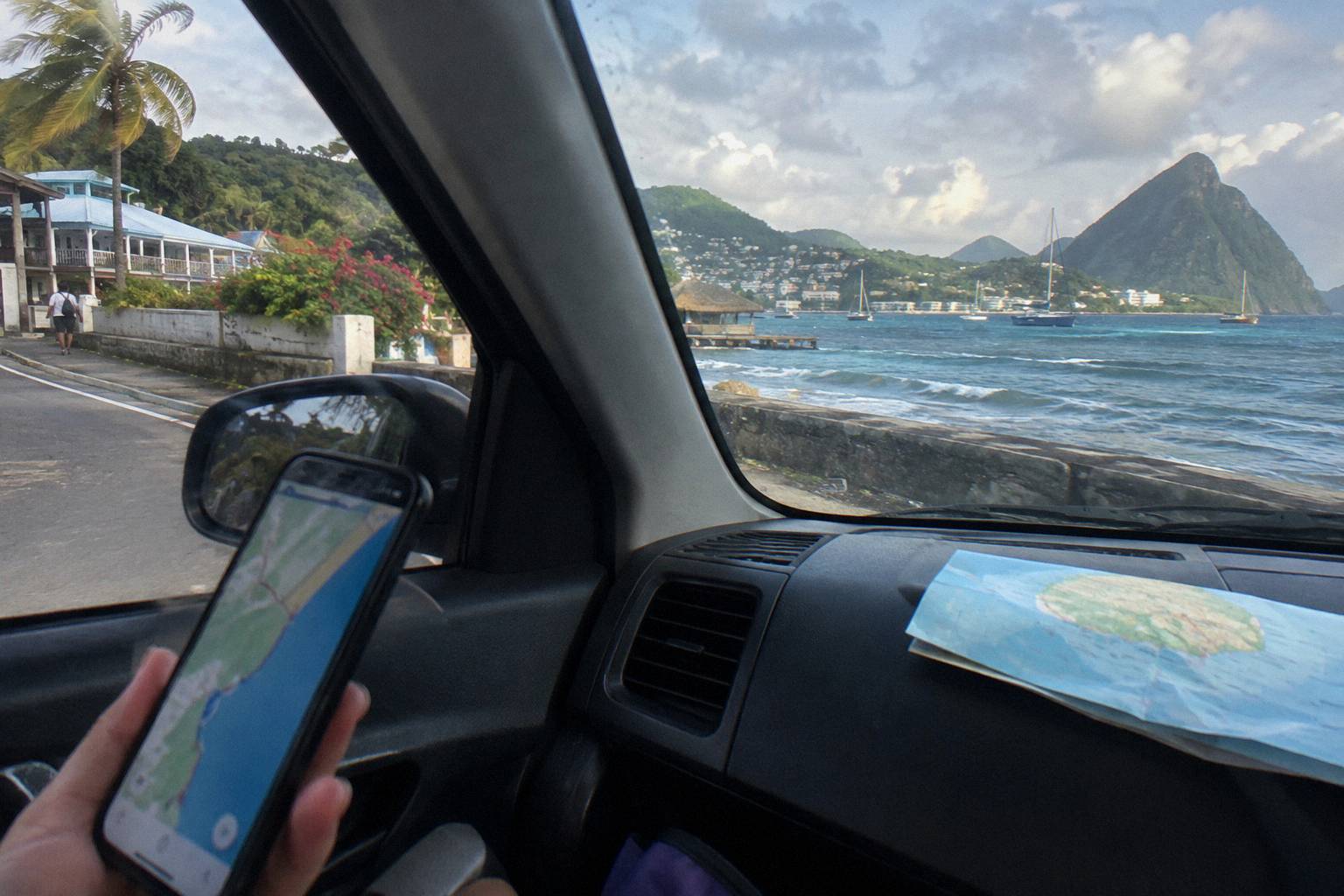
Maybe. Cars, 4x4s and scooters can be booked in advance or at the airports, hotels and rental offices, driving is on the left, and visitors need a temporary driving licence issued against a valid home licence. Renting makes sense for multi-stop itineraries with several nights in one place; it makes less sense for a single-resort stay where every drive starts and ends at the same gate.
The paperwork is straightforward per the Tourism Authority: a temporary driving licence is available with your valid home licence on arrival at the airport, at the police station in Castries, or at car rental offices. This site prints no licence fee, no rental price and no insurance claim, because none of those figures belongs in a comparison built on verified facts. What matters for the decision is not the daily rate anyway. It is who is driving, how much luggage you have, how many nights you are staying, and how many stops you actually plan.

The road is part of the decision. The Tourism Authority and operators alike describe the road north as long and winding, and official drive times reflect it: about 45 minutes to Soufriere, about 1 hour 10 minutes to Marigot Bay, about 1 hour 15 minutes to Castries, and about 1 hour 30 minutes to Gros Islet, with times varying with traffic, roadworks and rain. A driver who enjoys that kind of road will love the island. A driver who wants a cocktail at sunset and a nap on the way home will not.
The decision table below lays out the logic without a cost verdict:
| Your situation | Best fit | Why |
|---|---|---|
| One resort, one week, few off-site plans | Pre-booked transfers plus occasional taxis | Every drive starts at the same gate; a car sits parked |
| Two or three bases across the island | Rental car with a temporary licence | Multi-stop movement is where self-driving pays off |
| Day trips from one resort | Taxis or the Allez app per trip | No parking, no winding-road driving after dinner |
| Late arrival or early departure | Pre-booked private transfer | A confirmed ride beats any counter at odd hours |
Scooters appear on the Tourism Authority's rental list alongside cars and 4x4s, and a 4x4 suits the island's steeper interior roads better than a low sedan, but no safety or value verdict is offered here. If you want the full rental-versus-transfer breakdown, the car rental or transfer decision guide goes deeper on this site.

How Do You Pay And Tip A St Lucia Taxi Driver?
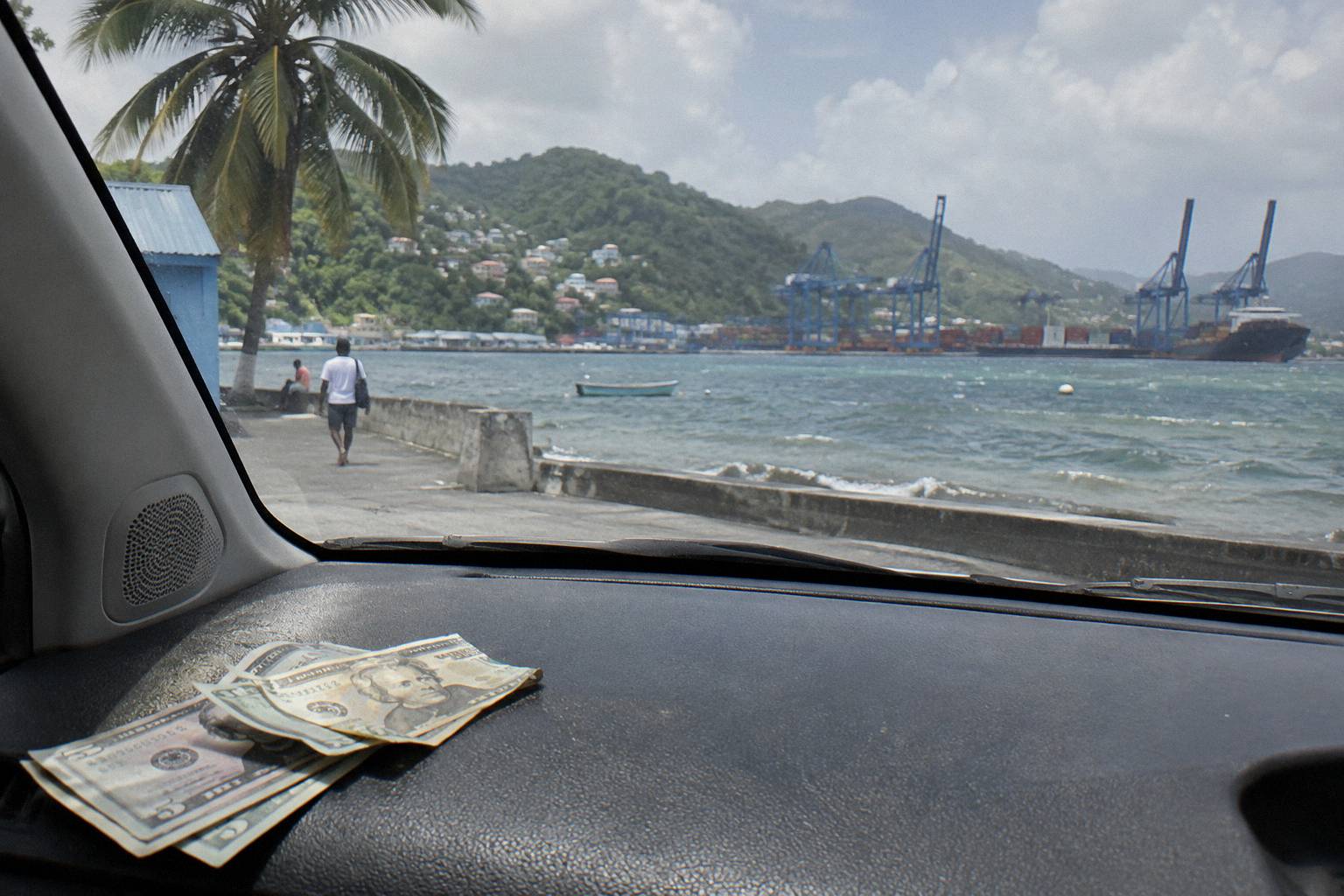
Pay in EC dollars or US dollars, both widely accepted, with change often given in EC at the fixed peg of EC$2.70 to US$1. Tipping is customary at about 10 to 12 percent on most bills per the Tourism Authority and is not automatically added; on pre-booked transfers, gratuities are listed as not included on most private pages, and no published driver-tip amount exists.
The currency side is easy. The Eastern Caribbean dollar is pegged at EC$2.70 to US$1, US dollars are accepted by hotels, restaurants, tour operators and taxis, and change frequently comes back in EC. Carry a mix. The taxi that takes EC$20 notes for a short hop and the driver who quotes a fare in dollars can both be right.
The tipping side has a wrinkle worth understanding. The Tourism Authority describes tipping as customary at about 10 to 12 percent on most bills and not automatically added, and that guidance is written for restaurant bills. For transfers, most private booking pages list gratuities as not included, meaning the driver's tip is yours to add. No published driver-tip amount for a transfer exists anywhere in the source material, so this guide prints no dollar figure and leaves the amount to you. The do you tip a transfer driver article works through the same question in more detail.
For stand taxis, the tip is cash at the end after the confirmed fare is met. For pre-booked transfers, gratuities being excluded means the same cash gesture applies, and a driver who handled bags, waited at a desk or offered island commentary along the road north has earned it more than one who did not.
Should You Pre-Book Your Return Transfer To The Airport?
Yes, for most travellers. A pre-booked private transfer puts a published from-price, a confirmed pickup and free cancellation up to 24 hours before on the one ride that cannot go wrong. Refresh Tours And Taxi Service lists one from US$130 per vehicle, rated 5.0 from 63 reviews, and round-trip pages such as A1 Private Round-Trip Transfer cover both legs from US$102, rated 5.0 from 59 reviews.
The return leg is the highest-stakes ride of any trip. A missed dinner reservation is a story; a missed international flight from an airport 53.4 km from Castries is a bill. Pre-booking removes the two failure modes of the stand taxi, no vehicle available and no agreed fare, and replaces them with a confirmed pickup and a price you saw before you left home. Both airports operate 6:00 am to 11:00 pm daily for extension-fee purposes, so a flight outside that window makes a confirmed ride more valuable still.
Two formats do the job. A one-way page booked for the departure day, such as the Refresh Tours page above, with bottled water and an air-conditioned vehicle listed, covers the single leg. A round-trip page covers both directions in one booking: A1 Private Round-Trip Transfer lists pickup from Hewanorra, bottled water and an air-conditioned vehicle, with gratuities not included, and its page describes a private vehicle despite the word shuttle in its title. Round trips suit travellers who like both legs settled at once; separate one-ways suit anyone whose departure plans might shift. All of these pages carry free cancellation up to 24 hours before, and a price varies by date, destination and party, with the booking page confirming it.
One question no booking page answers is the meeting detail: no transfer page states a name sign or a waiting time, and only the Hilary page states a flight-delay policy (the operator says it tracks flights and waits), so ask the operator before you book if any of those matter to you. The how do I find my transfer driver article covers what the pages do and do not promise.
Whichever format you choose, book it before the holiday starts rather than from the pool bar on the last morning. That single decision closes out the one piece of island logistics with real consequences, and everything else on this page, the taxis, the minibuses, the app, can stay spontaneous. If timing the departure is the open question, the departure transfer timing guide works backwards from your flight time.

| Mode | Plate or marker | How pricing works | Best use |
|---|---|---|---|
| Authorized taxi | Light blue plate, TX prefix | Fare confirmed per ride, not metered | Stand rides, evenings, day trips |
| Minibus | Green plate, M prefix | EC$2.50 to EC$8.00 per the Tourism Authority | Local hops without luggage |
| Allez app | N/A, rideshare | Upfront fare estimate in-app, cashless | Short city and resort-area trips |
| Rental car | Temporary driving licence required | Booked in advance or on arrival | Multi-base itineraries, many stops |
Common Questions About St Lucia Taxis And Getting Around
Are St Lucia Taxis Metered?
No. Taxis on the island are not metered, per an operator statement, and fares vary by destination, party size, luggage and company. The Tourism Authority's advice is to confirm the fare before you hire the taxi.
How Do I Know A Taxi Is Authorized?
Every authorized taxi carries a light blue number plate with a TX prefix, per the Tourism Authority. A car without that plate is not an authorized taxi.
Can I Pay For A Taxi In US Dollars?
Yes. US dollars are widely accepted by taxis, hotels, restaurants and tour operators, the Eastern Caribbean dollar is pegged at EC$2.70 to US$1, and change is often given in EC dollars.
Can I Take A Minibus From The Airport To My Resort?
It is not advisable with luggage. Minibuses are the island's main local transport on set routes with fares of EC$2.50 to EC$8.00, built for local journeys rather than airport-to-resort runs.
Is There An Uber Or Lyft In St Lucia?
Those apps do not operate on the island. The local equivalent is Allez, a homegrown rideshare app with upfront fare estimates and cashless payment that covers airport arrivals, per the Tourism Authority.
Do I Need A Special Licence To Drive In St Lucia?
Yes. Visitors need a temporary driving licence, available with a valid home licence on arrival at the airport, at the police station in Castries, or at car rental offices. Driving is on the left.
Should I Pre-Book My Taxi Back To The Airport?
For most travellers, yes. A pre-booked private transfer puts a published from-price, a confirmed pickup and free cancellation up to 24 hours before on the one ride attached to a flight.